
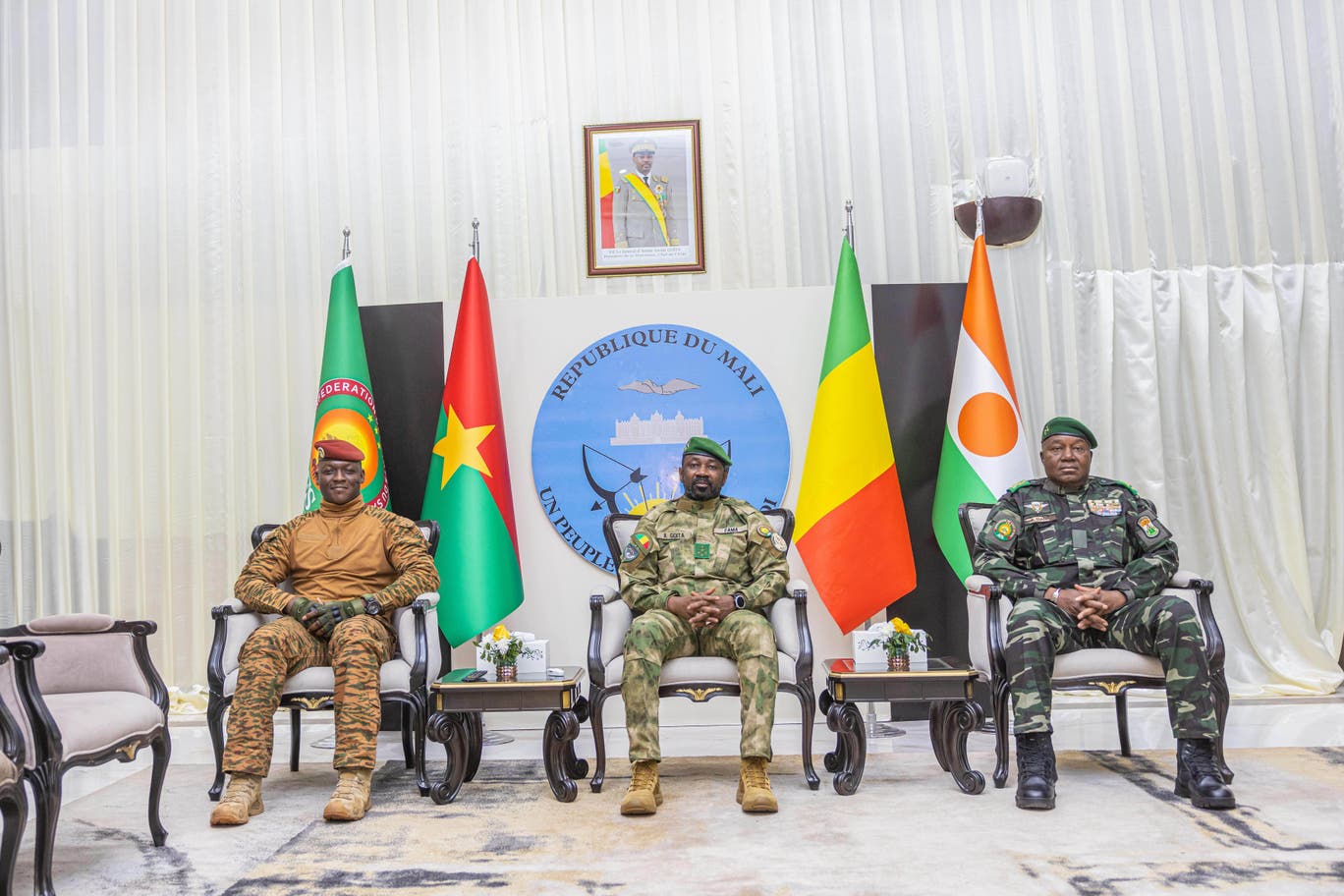
Sahel States Unite: Mali, Burkina Faso, and Niger Plan Massive Joint Military Offensive Against Extremists
The head of a Mali, Burkina Faso, and Niger coalition has stated that the formation of a combined battalion "must be followed by large-scale operations in the coming days."
The leader of a Mali, Burkina Faso, and Niger alliance announced on Tuesday that the formation of a combined battalion "must be followed by large-scale operations in the coming days" in an area plagued by lethal extremism.
Burkina Faso leader Capt. Ibrahim Traoré provided no details in his remarks following his appointment as the new chairman of the Alliance of Sahel States, whose three military-led nations resigned from West Africa's regional union this year. The alliance was created in 2023.
Mali, Burkina Faso, and Niger are the hardest hit, as the huge Sahel region south of the Sahara has become the deadliest spot in the world for extremism, with armed organizations linked to al-Qaida and the Islamic State group. In recent years, all three countries have experienced coups and faced overstretched security forces.
The leaders of the countries agreed at a summit on Tuesday to strengthen security and commercial ties, only days after the combined military brigade was formed to combat armed groups. It is expected to have 5,000 employees.
The alliance has "put an end to all occupation forces in our countries," said Niger's junta leader, Abdourahamane Tchiani, referring to member states' decision to expel longtime partners France and the United States.
No country or interest group will make decisions for our countries any more." Tchiani added.
However, Mali, Burkina Faso, and Niger have turned to Russia as a crucial security ally.
According to Rida Lyammouri, a Sahel specialist at Morocco's Policy Centre for the New South think tank, the region's complicated security crisis is "very difficult to defeat" regardless of who is involved in the alliance.
According to Ulf Lessing, chairman of the Konrad Adenauer Foundation's Sahel program, the second annual conference demonstrates growing coordination among the three countries, despite shattered relations and coup-related sanctions from global partners.
The alliance "enjoys popularity among citizens of the three countries" and is attempting to maintain momentum by expanding collaboration beyond cross-border military operations, Lessing explained.


 Posts
Posts


1 Comments
Nice one
ReplyDelete