
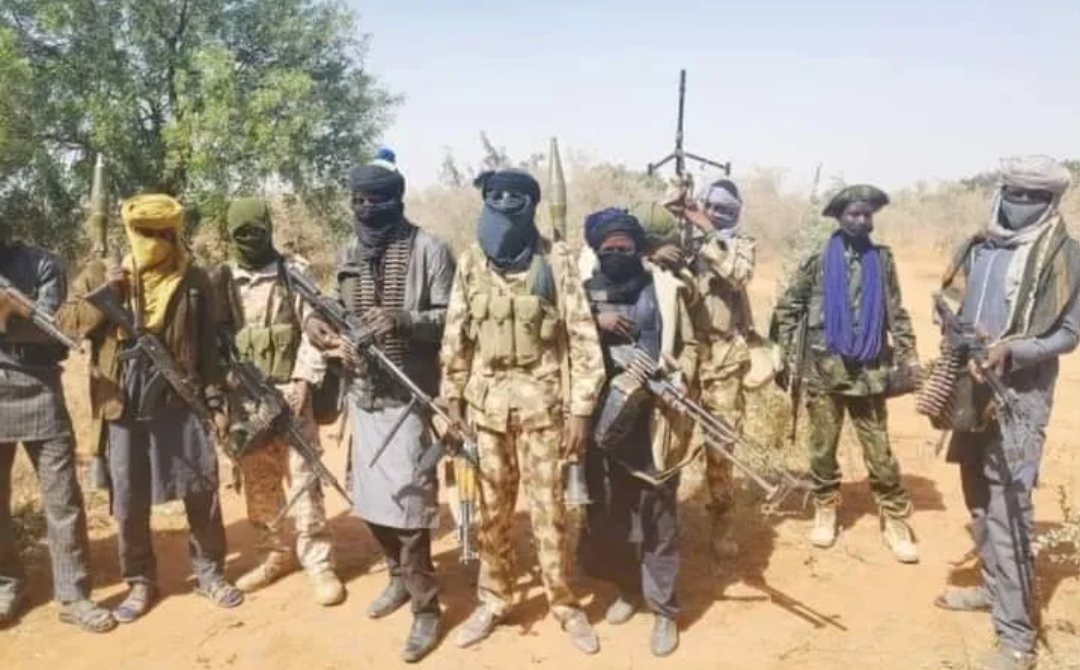
Boko Haram and Bandits: The Dual Threat Nigeria Must Defeat
Nigeria, Africa's most populous country and greatest economy, is facing a severe security crisis that jeopardizes its territorial integrity, social cohesion, and development goals. This crisis is driven by two independent but more intertwined malignant forces: the Islamist insurgency of Boko Haram and its breakaway factions in the Northeast, and the metastasizing violence of armed bandit groups, particularly in the Northwest and North-Central regions. Together, they form a corrosive dual menace that has killed tens of thousands, displaced millions, and created a lawless ecosystem. Defeating this dual threat is not only a security goal, but an existential need for the Nigerian state.
The Ideological Insurgency: Boko Haram's War Against the State
Boko Haram (formally known as Jama'atu Ahlis Sunna Lidda'Awati Wal-Jihad, which translates to "People Committed to the Propagation of the Prophet's Teachings and Jihad") began in the early 2000s. It began as a militant Islamist group led by Mohammed Yusuf that opposed Western education and secular rule, pushing for a pure Islamic state based on Sharia law. Yusuf's murder in police detention in 2009 converted the gang into a full-fledged, viciously apocalyptic insurgency led by Abubakar Shekau.
Boko Haram's main threats are ideological and geographical. Its goal is to destroy the Nigerian secular state and replace it with a caliphate. This has translated to:
Territorial Ambition: In 2014, the organization acquired and controlled large areas of land in Borno, Yobe, and Adamawa states, establishing a caliphate in Gwoza. Despite being mostly removed by military counter-offensives, it maintains the ambition and potential to administer areas in the Lake Chad basin's hinterlands.
A War on Civilians: Civilians are deliberately targeted by suicide bombs (typically involving women and girls), market attacks, and systematic destruction of towns. The 2014 kidnapping of 276 Chibok schoolgirls became a worldwide icon of this atrocity.
3. The Economic and Human Cost
This dual threat has worsened poverty, hunger, unemployment, and school dropout rates. Entire communities have been abandoned, farmlands destroyed, and social services disrupted. The trauma experienced by victims—especially women and children—will take generations to heal.
Nigeria cannot afford to overlook these consequences. Any nation weakened internally is vulnerable in every other area.
Criminal Insurgency: The Bandit Crisis
In contrast to Boko Haram's ideological aspirations, the banditry in the Northwest (Zamfara, Katsina, Kaduna, Sokoto) and North-Central (Niger, Plateau) regions is driven by complex criminal economies and communal warfare. These gangs, also termed "bandits" or "fulani militia", are loose networks of armed militants largely driven by profit through:
Cattle Rustling and Livestock Raiding: The theft of livestock, the region's principal economic asset, has decimated rural economies and sparked cycles of retaliation between herder and farmer communities.
The bandit crisis is the result of a "perfect storm": decades of official neglect, environmental deterioration (desertification driving herders south), a profusion of small guns, widespread poverty, and a breakdown of established conflict-resolution systems. The lack of the state paved the way for warlords to provide predatory "protection" and profit from turmoil. Bandits, unlike Boko Haram, do not have a common political or ideological agenda; instead, they seek cash and power.
Convergence and Synergy: A more dangerous landscape.
The most concerning development is the potential and obvious convergence of these two threats. While separate, they function in a symbiotic ecology of instability:
Tactical and operational cross-pollination: There is evidence of weapon trafficking, possible training exchanges, and strategy adoption. Some bandit organizations are said to have used suicide bombings similar to those carried out by Boko Haram. In contrast, Islamist groups may learn from bandits' very adept kidnapping logistics.
The path to defeat: a multidimensional strategy.
Boko Haram and the robbers reflect two sides of the Nigerian state's crisis: one is fighting for its soul, the other for its substance. Their possible merger looms as a catastrophe. Nigeria is on a precipice. The twin danger can only be vanquished by viewing it as a multidimensional catastrophe that necessitates an equally sophisticated response—one that employs military precision on the one hand and governance, development, and reconciliation on the other. The consequence of failure is not only further violence, but the dismantling of the Nigerian mission itself. Now is the moment for a thorough, resolute, and sustained national response.
Nigeria is currently facing two lethal security threats:
Boko Haram/ISWAP insurgency in the northeast
Armed banditry in the North-West and North Central
The latest execution of an abducted soldier in Borno demonstrates how cruel militant organizations remain. Meanwhile, bandits continue to abduct, extort, and displace civilians in Kaduna, Niger, Zamfara, Katsina, and Plateau states.


 Posts
Posts


0 Comments